Episode 6
Practice Growth HQ | The Fine Art of Listening to Your Customers with Author, Frederick Dudek
Today, we're diving into the fine art of listening to your patients with the insightful Frederik Dudek. The big takeaway? Listening isn’t just a skill; it’s a game-changer in healthcare. Frederik, an award-winning author and sales expert, shares his journey from a technical background to mastering the art of customer connection. We’ll explore how understanding your patients' long-term goals can transform your practice, turning mere transactions into lasting relationships. So, whether you're a dentist, physio, or any healthcare pro, get ready for some golden nuggets of wisdom that are sure to help you grow your practice and foster those all-important super fans!
In this episode of Practice Growth HQ we discuss the fine art of listening to your customers, and how it can exponentially grow your business.
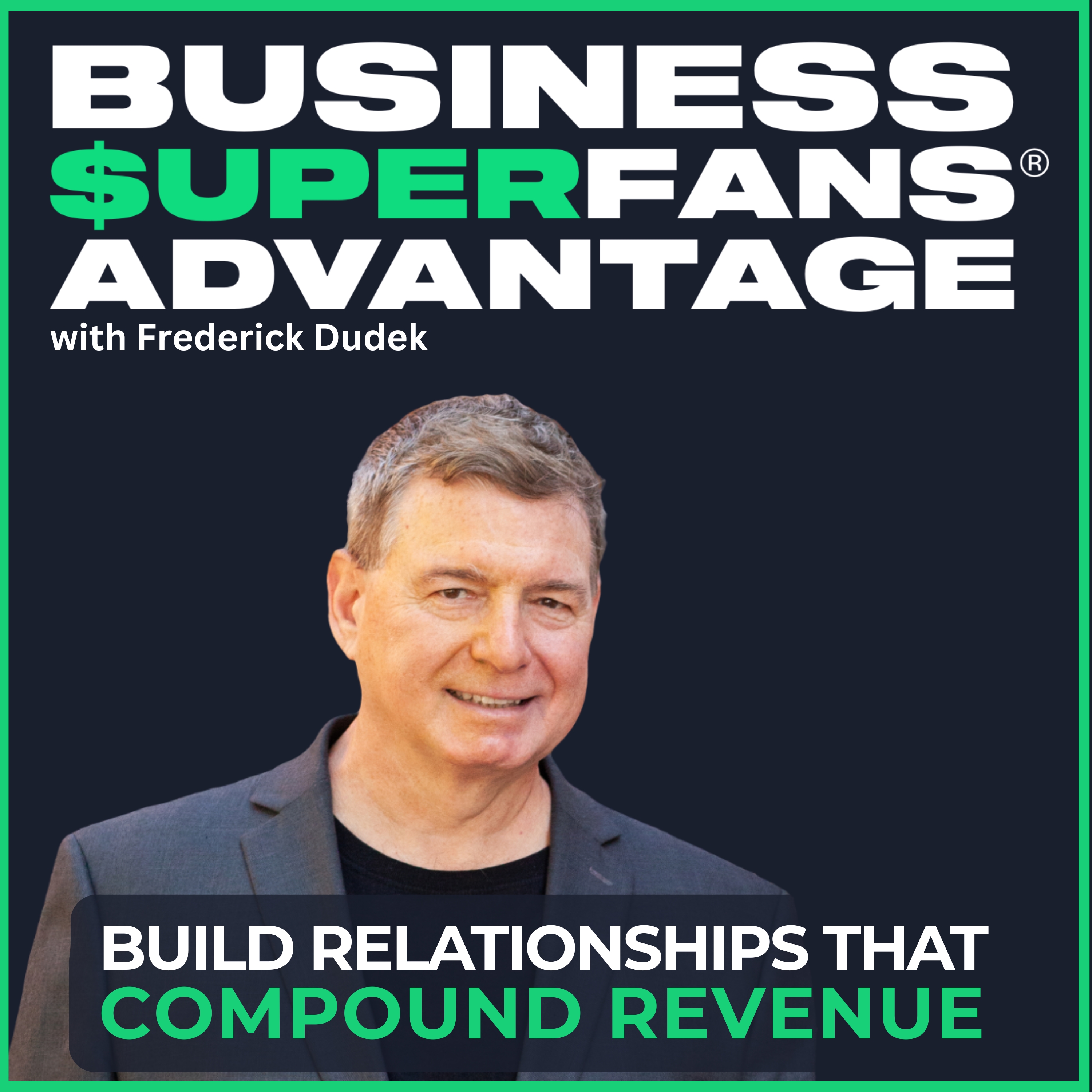
You’ll meet Frederick Dudek, author of ‘Creating Business Superfans’. In this episode, Frederick shares his insights on improving customer retention in your business through stronger relationships and the power of recognition in your network.
If you’re eager to learn how you can keep more of your existing patients while increasing revenue, take notes as you listen to this episode!
What you’ll learn:
- (07:10) Frederick unpacks the fine art of listening to your customers and shares how can it help you grow your business
- (13:10) Discover why learning more about your customers will keep them returning to you again and again
- (17:10) Learn simple techniques for dramatically increasing customer retention
- (19:26) Business Superfans: Find out what inspired Frederick to write his book plus a breakdown of each chapter
- (22:02) Your THREE Groups: Employees, Customers, and Business Alliance Partners. Find out how they work together to make your business a success
- (25:18) Learn how to build bi-directional relationships with your business alliance partners (and why it’s so important)
- (27:01) Discover how an overpriced steak turned Frederick into a superfan of his local butcher (and how you can apply these same principles to your own practice)
- (31:14) Learn why giving your customers more is the most cost-effective marketing you could ever invest in
- (36:09) Why it’s important to treat your employees as well as you’d like them to treat your customers
- Plus loads more!
Takeaways:
- Listening to your clients is the secret sauce for growing your healthcare practice faster, trust me on this one!
- Frederik Dudek's reverse sell technique focuses on understanding client goals before pitching solutions, a must-try for healthcare pros.
- Building super fans among your clients and employees can create a powerful marketing machine that costs you nothing but goodwill.
- Creating unexpected extra value for your patients can turn a mediocre experience into a raving review-worthy one, and isn't that what we all want?
Transcript
You're listening to Practice Growth hq, the.
Podcast where thought leaders, industry experts and thriving practice owners reveal their very best tips, tools and strategies to help grow your healthcare practice faster. Practicegrowthhq.com your thriving healthcare practice starts here. Now here's your host, Angus Pryor.
Hi everyone and welcome to Practice Growth hq. Welcome.
Whether you're a dentist, physio, doctor or other healthcare professional, we talk all about what's required personally and professionally to get your practice growing faster. Now today we're going to talk all about the fine art of listening to your patients with my guest, Frederik Dudek.
Now, when Frederik Dudek is not turning ideas into millions of dollars in global sales, the award winning author, speaker and top sales exec spends his time inspiring, inspiring others to achieve their highest business goals, much of which is covered in his business. In his book Business Superfans, which we're going to talk about today. All the way from Cave Creek in Arizona, Welcome, Frederick.
Freddy D:Hey, welcome Angus. Thank you very much for having me on your show. Quite exciting.
Angus Pryor:Yeah, good stuff. Now Frederic, we like to start with the fast five kind of quicker questions, quicker answers so people can get to know you quickly. Question 1.
Where did you grow up?
Freddy D:I grew up in a town called Warren, Michigan. It's a state. Originally.
I was born in Bordeaux, France, but under totalitarianism environment, my parents, I was screaming that I didn't want to leave France. They stuck a pacifier in me and said shut up, you're going. And so I grew up in the. In a metro Detroit area suburb called Warren.
Angus Pryor:Oh, there you go. Question number two. Favorite book besides your own,.
Freddy D:Think and Grow Rich.
Angus Pryor:Yeah, it's a classic, isn't it? It's, it's the sort of book that people frankly probably should read annually. Question number three. What's one of your superpowers?
Freddy D:One of my superpowers is getting people to do things that they didn't think they could do.
Angus Pryor:I like the sound of that. Question number four, something that you wish your 20 year old self knew.
Freddy D:Geez, good question. Something my 20 self, you're old, knew, is always have a vision and go after it and never lose sight of that vision.
Angus Pryor:Okay, that's, that's sage advice right there. Question number five, Something that you're grateful for.
Freddy D:I'm grateful for my companionette who's been with me for 10 years and her and I have gone through ups and downs and we're still madly in love with one another and we're planning to explore numerous countries together. So.
Angus Pryor:Okay, good stuff.
Now Frederic, before we get into the fine art of listening to your customers, your clients, and we're going to talk about your book as well, why don't you give us the, I believe they call it the Cliff Notes version. The Cliff Notes version of your background that led you up into this point.
Freddy D:Okay. Well, I started out as being a draftsperson and doing crafting, designing, you know, fixtures and stuff for the automotive industry.
ell, you may not, but back in: Angus Pryor:Yeah, I do.
Freddy D:And I'm the guy that designed the spot wall guns that spot welded all the body panels and making sure the tips were perpendicular. And I had the car in a full size vertical drafting board. And it was my job to make sure that the car could be welded together.
And that really taught me a lot about 3D and geometry. And I was selected by the company to learn a computer aided design software application. And I did that for about a year.
And real quickly I, I heard through a friend that I went to school with that this computer aided design company was actually looking for engineers because it was an emerging market. So I basically got put together a resume and submitted it and got called, got the interview, got the job, relocated to Chicago.
I became, initially I was not too good at presentations because I was more of an engineer, but I was very good at training and I ended up training pretty much a lot of large companies like Deaton Corporation, Westinghouse, et cetera, throughout the Midwest.
And I got the company was looking for salespeople to internally and I rose my hand and got picked and I got six months of pretty high end sales training paid for by the company commuting me back from Chicago to Boston.
And my first year of sales, I won some awards and I've never looked back and worked my way up to being in charge of global sales and kind of became known for the guy that if you want to get something on the market, you go to me and, and I, I was given a, the assignment. That's what moved me to Arizona initially. And I was said, okay, here's the product, nobody knows about it and go.
And so I set up a reseller channel around the world. I took that product from 0 to 3 million net to the company in a three year window.
And then I got some other companies that approached me and says, hey, we'll pay you to, you know, to take our product and get it on the map. And that's what she wrote.
Angus Pryor:Wow, good stuff.
Freddy D:I came up with, you know, the, the idea of the book was basically just a collection of things that I've done in the past and, you know, what propelled my, to my success.
Angus Pryor:Okay, Frederick, one of the things that you said when we were chatting before we got on air is that, and we're going to talk about the fine art of listening to customers, that as a kind of a techie guy, you know, you've got more of a technical background that the, you weren't the guy to be going.
And I forget the words you use, but you know that you're, that your, your selling was all very low key and it was much more about listening to the customer. Can you tell us a bit about that? Because the truth is that for many of our listeners as healthcare professionals, they're very similar.
You know, they've got a, they've got a technical backgr.
They don't actually like even the word selling, many of them, and yet they all recognize the listeners of this podcast that if you don't sell anything, well, you're out of business. So tell us about the fine art of listening to your customers.
Freddy D:Well, it's, it's, it's listening, but a little bit more. And I kind of created the reverse sell, and that's basically work to sell backwards.
So as an example, I would tarrance as Angus, when are you looking to be, you know, with this technology or this business, or in this case, you're talking about dental practices. When do you want to be profitable with this practice?
And we, we say, okay, well, we're thinking most answers would be that, well, I'm thinking of buying, you know, some kind of solution in the next month or so. And I said, well, that's irrelevant. Let's go back to where do you want to be in, in a couple years?
And then it says, well, you know, when you want to be profitable? And then we start working it backwards. Okay, well, what are the things that could be done?
So when I was selling the manufacturing software, I would turn around and says, okay, well, first off, we got to get it, we got to get training. So you got to get it ordered, shipped, installed, set up.
Then you got to get your people trained, and you're going to be running two systems simultaneously, and then you eventually start weaning one off, because that's the real world. And so I'd set up a whole timeline that says, okay, to meet your date of when you want to be profitable with this particular investment.
Based upon your timeline, Angus, we need to get a purchase order out this afternoon. So that we can meet your timeline that you just created on the marker board with me to it. And they would be like, okay. And it would be done.
So part of it was really what was, is, you know, in the case, I'll put this into the dental. Because I worked with the actually a chiropractors a little different, but I helped grow their business.
Angus Pryor:We've got a number of different healthcare professionals listening to the show.
Freddy D:Okay, so what we, we implemented was a, you know, talking about the customers, what are some of their objectives, what are their, their health objectives, what are their long term visions?
And then start talking more about the long term and accomplishing the long term and not so much about, well, you got to sign up for this particular program right now because the program sells itself because it's the vehicle that's going to accomplish the long term goal. So there's no selling really involved. It's like, well, to accomplish this, if we put this particular plan in place for you, we're going to get there.
Don't you agree? Because you know, the, the potential customer says, well yeah, that does make sense. Okay, well let's get the card and let's get you set up.
You know, it's, it's really, it's fun.
I look at it as fun because you're not selling, you're really helping them get to where they want to go and you just, the, the product or the service is the tool to get them there and all it is.
Angus Pryor:No, I like that approach and I think, you know, frankly, that is quite transferable to the healthcare professionals listening to this.
I mean, you know, whether you're a dentist or a doctor or a physiotherapist or whatever, like in a sense saying to your patients sitting in front of you, you know, where would you like your, you know, insert health to be in a year's time or two years time.
Like I, I see a physiotherapist quite regularly and if he said to me, well, Angus, you know, where would you like your, your strength or your stamina or whatever to be in a year's time? I mean it would be, it'd get you thinking and you're absolutely right, then all he's doing is help me discover my own goals.
And, and therefore once I've enunciated those, which in many cases people haven't even thought about really, or maybe only sending thought about, then the sort of next steps, it's almost like, well, hey Fred, you know, what can you do to help me achieve the goals I've just told you.
Freddy D:Right.
Angus Pryor:The other part that I like about that is I coined a phrase a few years ago, which is if you say it, it's debatable. If they say it, it's gospel.
And because they're the ones who've expressed to you, perhaps for the first time, what their goals are, then it becomes the perfect thing to go back and say, well, you know, Frederick, you've told me that your goal is to, you know, almost like, what do you see as the best way forward? And it's like, well, can you help me, Dr. Angus? You know.
Freddy D:Right, yeah, exactly. It's, they're, they're now buying. You're no longer selling.
Angus Pryor:Yeah.
Freddy D:You've changed, you changed the dynamics of it.
Angus Pryor:Yeah. And look, as I say, I think honestly, every single listener to this is like, that sounds much more like me in healthcare. I don't want to be selling.
I don't like the, any associations that I'm somehow trying to push an agenda that's my own and not my patients. And of course the healthcare professionals have, you know, got various oaths that they've made about, you know, do no harm, etc.
But I can tell you from a customer point of view, if I go and see, and it's fair to say that what you're proposing, I don't think I've had a single healthcare professional ever ask me about. And yet, yeah, it's like, what do you want to be? You know, I go and see a GP reasonably regularly. I realize I'm a bit atypical.
I certainly go and see my dentist twice a year. And if they said, well, Angus, where do you want your smile to be in a year's time or maybe five years time?
You know, as you get a few more gray hairs, you start wondering about where's your smile going to be when you're, you know, 60, 70, 80, it becomes a much more powerful. What else can you tell us about that?
I mean, in a sense, you've just laid out the whole technique very simply, but I'm sure there's some nuance there. What are other things that the listeners can take from this idea of listening to the customers?
Freddy D:Well, it's, it's, you know, people are people, they have lives, they have ambitions, they have goals. And so, you know, like we, when we talked a little, you know, before we got started, I talked about that IT manager.
And, you know, his goal was to, as this company was growing, his personal ambition was to be the IT manager for all the different organizations that they were buying and acquiring, etc. So I really looked at facilitating and helping him accomplish that goal. So it's the same thing if you've got patients or etc.
You know, they may have a job, they may own a business, and it's learning a little bit more about them as a person and what are their personal goals besides, you know, why they're there. But, and then figuring out ways you can help them or connect them with somebody that could, that could be a benefit for them is huge.
And it doesn't cost anything. It's just, it's just good goodwill and it goes around and comes around. And so you, you put it out the universe, universe gives it back 10 times.
And I found that to be very, very true.
Many times is, you know, I, I meet with people and I meet them at networking events and meet them for a coffee and it's like, well, where is it that you want to, you know, what's your goal, what's your ambitions, what's your plans? And you know, we may never do business together, but I may run into somebody that may use their service.
But because I took the time to learn about them, you know, I've given them referrals. So it's the same thing.
Imagine if you're going into your dentist or chiropractor or whatever it is, and they, and all of a sudden they says, hey, you know what, I was talking to somebody else and they could use your service. Can I give them your information? That person's gonna be like, holy cow.
And they're gonna tell all their friends, wow, My, my dentist just gave me a referral that generated me x thousands of dollars of business. Huge.
Angus Pryor:That's an interesting one. I was at a presentation on Friday where someone who's an expert in this space was talking about patient retention.
And the reality is he asked a question that I thought was a great question, but certainly made a few people stop and think, which was, how big would your practice be if you'd never ever lost a patient? And I, you know, the people who are participating, they're like, are probably twice as big, maybe three times as big. Someone said ten times as big.
You know, which is a pretty sobering thought. And of course, you know, people move and so on. I mean, I moved interstate last year, so I moved.
You know, they wouldn't expect me to go back across the border. You know, I moved a 10 hour car drive. I'm not going back across there to go and see my dentist.
But it just, it just, it's quite a sobering thought the other one that I often do with clients is I will ask them to identify who are the clients they have, who are the patients they have, who are their kind of top spenders. Not because it's all about generating income for the business, but those who are the top spenders are the people who trust them.
You know, they vote with their. What it's like a proxy for trust.
And I've asked the question that you just posed, Frederic, which was like, well, you know, what do you know about these people?
Kind of what do you know about them other than the set of teeth that's in front of you or the, you know, the torn hamstring that's presenting itself to you? And usually fortunately they do.
But one of the points made by the speaker on Friday is like, how can you expect people to have great retention to keep coming back and seeing you if they just feel like they're sort of a patient rather than being a person?
Freddy D:Well, absolutely. That's. That's, that's correct. And that's one of some of the things I talk about in, in the book Creating Business Super Fans.
And what I've with with that is not only do I talk about customers, but I also talk about employees, team members, and I also talk about business alliance partnerships, which really people don't talk about because they're all really intertw. Mind if you stop and think about it?
So to your point about the customers, part of it is if a customer doesn't feel appreciated and, and recognized, then doesn't matter what, they're going to go someplace else. Because as human beings, and this is one of my quotes is we'll crawl through broken glass for appreciation and recognition.
Angus Pryor:Okay, that's interesting.
Freddy D:And so when you, you know, you, you got that customer that or that patient that's coming in regularly and you know, you, sometimes it's nice to just, hey, you know what, really appreciate you being a customer, recognizing them on their birthdays. I mean, people don't realize it, but that's a really simple but gigantic tactic to stay in contact with the customer.
I mean, I, I've got a lawyer friend that I also still do some work with a consulting aspect and he emailed me today just thanking me for the sweet good goodies and very thoughtful. I sent him a card with some, some treats in there for him for a birthday physical card. Not an email, not an e card, but a real thing.
And you know, that's how you keep a customer. He's been my customer for 10 years. You know, it's the little things are the big things.
Angus Pryor:Yeah.
And I think your, your point about physical cards well made because by inference, if I get a physical card from someone, what that tells me is that person's gone to that bit of extra effort.
You know, they could, they could have sent me an email in 5 seconds and who knows, maybe they automated it and they actually hadn't thought about me at all. But when I get a physical card in the mail, that means, okay, well that person's actually thinking about me. Now.
Frederick, we've alluded to Business Super Fans, which is your book. Tell us about that.
Freddy D:Well, this is the, the COVID of the book so people can see creating business super fans.
Angus Pryor:Yeah, that's good.
Freddy D:And, and, and that's me and my companionette with our faces painted.
Angus Pryor:Okay.
Freddy D:So just like you know, international football, you know, you've got the super fans that got their faces painted banners and stuff. So that's why I took that page right out of their book and my idea came as well.
Why can't businesses create super fans that are die hard fans promoting that business? And then I did a lot of research onto it and I realized that there's people that, that what I would call silos of information.
So just like you mentioned, the guy you know, talked about customer retention, but that's really a silo if you really stop and think about it because you know, your employees or your team are the face to the customer. So you've got to make sure that the team is good. And then there's people that write about employee retention motivation, but that's another silo.
And nobody ever really talks about business alliance partners, complementary businesses. And so what I did is I combined all three because at the end of the day in the book they all three intertwined.
And so you know, just to give you an idea of some of the. I run through the chapters real quick but they're self kind of explanatory is when I, when I read it is.
Okay, so chapter one is, is it all begins about prospecting. So it's a for new business. How do I get customers and if it's existing business, how do I find new customers?
Then why follow up is super important because people meet people and connections. But then the business card goes into the file and there's no follow up. Thank you. Builds a bond of trust. Thank you. So, so important.
It's amazing when you know, you get a business that comes to your house or business and, and does service and you don't hear from them again, they're Gone, you know, and it's like, wait a minute. You know, there's an example of not retain, retaining a customer, getting personal with birthday greetings. We just talked about that.
Create an environment of appreciation. You know, that's something that's really important.
But what's unique about this is all in each chapter, each chapter talks about all the three different groups and things to do for each specific group and software tools that are recommended for those things. I talk about if, if that is needed.
Angus Pryor:Just, just, just, just tell us about the three different groups again.
Freddy D:You've got your employees.
Angus Pryor:Yep.
Freddy D:You've got your customers.
Angus Pryor:Yep.
Freddy D:And then I call your business alliance partners.
Angus Pryor:Okay.
Freddy D:Complementary businesses. So think of a simple example that everybody will get is you got a painting and a flooring guy. The two go together.
Angus Pryor:Yeah.
Freddy D:And so the painting guy refers to the flooring guy, the flooring guy refers to the painting guy. But now if the team that goes out there to do does the actual work, does a poor job, it affects both of them.
Likewise, if the flooring guy is giving the painting guy all the referrals from the projects he's getting, but the painting guy isn't reciprocating, that partnership is going to go in the toilet pretty quickly.
Angus Pryor:It's interesting you say that. I've, I do, in addition to working with healthcare professionals, I'll call them general, you know, like general practitioner, general dentist, etc.
I work with a bunch of specialists and in some fields, the specialists are having to work harder and harder. In Australia and in the us, basically every single year, the ratio of dentists, doctors, physiotherapists to the population gets higher.
So in other words, there's more and more dentists per head, there's more and more doctors and physios and so on.
And the other trend that we see in dentistry in one direction and curiously in veterinary in another direction, is a trend towards the dentists themselves referring less work to the specialists because they do more in house.
Whereas curiously in veterinary it's, you know, these days you can have a, you know, like a dog psychologist, a dog cardiologist, you know, et cetera, et cetera.
But it was just the comment from the specialist where they are now effectively actively courting their referring dentists because there's this increasing competition and they recognise that a sort of symbiotic relationship is absolutely essential. Hey, Angus here. How would you like to speed up the growth of your healthcare practice?
For the first time, we're inviting you to come live on, on the show as we dissect your business and identify the ways to get your practice growing faster. You'll get expert advice and simple to implement tools and tips while the listeners share the journey with you.
If this sounds like you, then visit www.practicegrowthhq.com live and enter your details. If you make it, we'll be in touch. Now let's get back on with the show.
Freddy D:Absolutely right. But you got to cultivate that relationship.
You got to maintain that relationship and it's going to be bidirectional because if it's one direction, like I mentioned, it'll fall apart.
Angus Pryor:How do you. So in the, in the scenario that I mentioned, how do you create that bi directional.
If the, say for example a specialist who's listening and they are largely dependent on the, the general physician, whatever it is referring to, then how do you create that bi directional?
Freddy D:Well, you, you've got to meet with them. I mean it's. You, you gotta, you gotta build the relationship.
It goes down to basically people like people that you know, that they, they like and get along with. So you've got to build that relationship.
You got to get together, you know, once in a while, casually talk about their business, what you can do to help their business. It's about them. It's not about you. Okay. It's when you, when you focus on, look, what can I do to help grow your practice?
Okay, it's going to reciprocate automatically because now it's like, wow, this is turning into a partnership. This is kind of a pretty cool. And. And it grows. Where it falls apart is again when it becomes one sided where. Okay, okay, I'm the specialist.
I'm referring to all this to the, to the doctor.
But I'm not getting anything back where I get one once in a blue moon, then that becomes, you know, now it becomes like really this is, this isn't working for me. And it falls apart.
Likewise, if the service that's being offered isn't delivered, then that also creates a falling apart because now it's affecting my reputation as my business because I'm the one that referred you. So it's very important that that really stays connected.
Angus Pryor:Look, I, we should, we should spend a few more moments on this because every single healthcare professional has got the potential for some form of reciprocal arrangement. That's the reality.
If you're a chiropractor, you know, maybe you're getting referrals from a, I mean it could be a naturopath, it could be a doctor, whatever the case may be.
Freddy D:Well, that's, that's where I, you know, I'll continue on to chapters because it'll make sense, you know, the next chapter after appreciation is given what they crave recognition. So, you know, if I turn around, says Angus, thanks a lot.
Really appreciate this thing that's you and I, if I turn around, says hey to my, my audience, you know, my, my customer base, for example, is Angus really helped grow my business in this last year and I really am grateful for our partnership. That changes that. Just, just like that, that changed the dynamics because now it's.
You feel elevated, you feel edified, you know, and so now you're like, wow, this guy's pretty cool. You know, this, this thing is, this is. I got to do something back. And it just creates a, it creates an energy.
You know, I talk about retention, how it saves you money, you know, the onboarding and of employees, people, you know, it's just, it's a huge cost, retraining, the loss of productivity of the person that's training, etc. And of course that affects customers and that affects business partnerships.
One here that's quite, really important that people really never think about is the unexpected extras, as I call them, you know, is go beyond expectation with unexpected extras, where you do something above and beyond. You don't charge for it.
It's just something that you did because it was the right thing to do or it was, you know, it was just something that you wanted to make that particular person feel good. An example, this past Saturday, I went to buy some steaks at a brand new butcher shop.
So I went there and bought a couple of steaks and I come home and I'm going, like, man, these are expensive. You know, I paid over a hundred US dollars for them. Wow. And I'm going, you know, for two of them, I'm going, that's. I think I paid.
So I go, I remember it saying 25. And I'm seeing, oh no, it's 30.35.99.
So I go back, you know, because it's only like a half a mile from my place, and I go there and says, I think I got overcharged. The guy goes, oh my God, you did. You know, our system screwed up and, and we're brand new, you know, things happen.
So he says, gave me the credit back, gave me a bottle of wine and gave me a cheesecake as a dessert. That was the unexpected extra. And so actually I went back and gave him two signed books as my thank you.
And you know, but more importantly, I built relationships and they built a relationship and they created a super fan out of me because I'm just sharing this story.
Angus Pryor:Yeah, yeah. It's interesting. That is interesting. I do like that. So. Because that's what I was going to ask you about. The opportunity to go the extra mile.
I mean one of it sounds like frankly where you screw up and you, you know, most people will accept that. What do they say? To err as human, to forgive divine. I mean humans, we make mistakes, but that in a sense that's an.
Isn't it in a relationship to actually really go that extra mile and turn what could have been Frederick telling us about his bad experience with the butcher and then suddenly he's telling us about a great experience.
Freddy D:So it's, it's, you know, I'll put it is into, you know, a dental.
Is that, you know, for example, you know, giving them some, you know, let's say something went a little array or whatever, you know, hey, your free checkup, come back and I'll give you free teeth cleaning. Just something, something that just goes above and beyond. It's unexpected where that person goes, wow.
And, and they're, they're, you know, dumbfounded for a minute because they're going, did that just really happen? And, and that's where you, you convert that person right then and there into a superfan.
Because they're going to tell their family, they're going to tell their friends, you know, is like, wow, look, this is what happened. Can you believe it? And that's energy. And that energy just go, it continues.
Angus Pryor:Now let me, let me pose a question as a devil's advocate. I'm not, I'm not endorsing this view.
I'm just asking a question that some people might, they say, well, Frederick, if I, if I'm always going the extra mile, you know, like it's, it's going to cost me. It's, you know, all this extra cost for me to do that. What would be your response to that?
Freddy D:It's marketing.
Angus Pryor:Okay?
Freddy D:It's simple. It's just good marketing. It's clever marketing. It's cost effective marketing. It's cheaper than putting ads out.
It's because word of mouth and you get something. You know, my, my next chapter is reviews is the new word of mouth. And that person's going to go and write a phenomenal review for you.
That's a word of mouth. That's an endorsement. That's. You can't buy that kind of marketing.
Angus Pryor:Yeah, that's interesting. You know, I was with my wife, I think last weekend and we went to a coastal town not that far from here, an hour 20.
And she had, of course, checked the reviews before booking into a restaurant.
Freddy D:We do all that, all of us do that today.
Angus Pryor:We, we do do that, but here's the curious part.
So we went to the restaurant in question and, you know, I don't know, maybe they're having a bad night or whatever, but the vibe, the energy of the place, at least in relation to us, is we've got a really crappy table right up against a counter where, you know, there was people sort of backing into us the whole time. And then, you know, there was sort of cocktails being made. But they were closing at a certain time.
And when I went and tried to order something, the guy was very unhelpful and really just trying to get out of there. And I'm, I'm a relatively mild mannered, mannered individual, Frederick. But on this occasion, I saw red.
So I, I walked back to my wife and I said, we're leaving. And I walked out of the restaurant. We, you know, we were, we were away by ourselves, like, ready to have a very nice time at the, down by the coast.
And so what happened is we walked into another restaurant and we had a fantastic time. And I left them a gushing five star review of the other place. I, I wasn't vindictive. I didn't go and throw the other guys under the bus.
But, you know, just in those few moments, we could have stayed there, we could have spent a bunch of money, we could have had a great time. But in those few moments of an interaction with two different people, it was like that opportunity was gone and then we walked out.
And then suddenly a really positive experience at another place.
Freddy D:That's why, that's why I kind of put this book together. Because that's a perfect example of customer and employee. And the employee failed and did not recognize the situation properly cost them a customer.
And you're just now also not mentioning the name, but you're basically, I'm sure, to your friends and we don't need to mention a name now. But you've mentioned your experience, the bad experience.
So it proves my point that, you know, that that's, that's all three are really intertwined and you really gotta make sure that all three are working.
Angus Pryor:Yeah, look, I, I'm, you know, I asked you the question before about some people saying it's a cost, but that is, that's on. Frederick and I are aligned on that. That's not the way I look at it.
I say, well, if, if that's an opportunity to provide something special for people.
Freddy D:People.
Angus Pryor:And you know, for the bottle of wine and the cheesecake, it was relatively inexpensive, you know, and there'd be things you could do at your practice that would be relatively inexpensive. But the, as Frederick alluded to, people will crawl through glass. What did you say for a compliment?
Freddy D:Broken. People will crawl through broken glass for appreciation and recognition. And everybody I asked, the question is yes.
Angus Pryor:Yeah.
So in other words, for you to demonstrate a recognition for someone by just going that extra mile, you're speaking into the conversation that's happening in their head, which is, you know, at some subconscious level, it's like, I want to feel special, I want to be recognized. And then suddenly, you know, they're telling these stories to a whole bunch of others.
Freddy D:Yeah, it's like the employee, you know, going above and beyond and taking care of a situation with the customer or patient or whatever. And you as the owner recognize that and you stop and you, you know, and you, hey, you know what? This was really great.
Here's a, here's a gift card for Amazon. You know, because you went above and beyond, that person is going to be like, holy cow, they recognized that I did this. And, and now they feel good.
And what happens is gets. It catches on because other team members of that company are going to go, wow, Susie got, you know, got recognized.
And because it was recognized in front of everybody, I want that recognition. And everybody starts upping their game. It just, it's just a natural deal, but it takes that.
The other part is, you know, grow expense exponentially through referrals. And that's why I talk about the super fans. As a super fan is going to be promoting that business.
Whether it's an employee that says, man, I work at this awesome company. Let me tell you what's well with this company. They're telling all their friends and family.
You got the customers that says, wow and the patience that says, you know, this place takes care of me. They take good care. They got great service.
You know, I left them a five star review and I'm telling everybody about the same thing with the business partner.
Angus Pryor:I've heard it said, sorry to interrupt. You know, treat your employees as well as you would like them to treat your customers.
Freddy D:Right. Yeah, it goes. That's hand in hand. You want them to become super fans of your business.
And the, the chapter before the last one is action is rooted in gratitude. So you've got to express gratitude. That's really important about that.
And that Goes around being grateful for your team members, being grateful for your customers, doing customer appreciation. And the last chapter is game time. Okay, now that you read this book, let's do something about it.
Angus Pryor:Yeah.
Freddy D:Because a lot of people read a book and says, oh, great book. It goes on the shelf and that's the end of it.
Angus Pryor:Yes.
Freddy D:What we did different is we.
It's at the end of each chapter, there's a question that's asked, and that questions rates you from 0 to 10 on how you think you're at from that particular chapter for all the chapters.
And what we create was unique was the superfan scorecard, where you take each chapter and you put your dots in based upon where your score is, you know, and the superstars right there. And you'll end up most likely with the dilapidated wheel because it's not perfectly round.
Angus Pryor:Yeah.
Freddy D:Well, then this whole guide, which is free off the website, gives you in things and action steps, and you got a deal here we can do the action steps to go ahead and, and correct those things and improve on your recognition, improve on your gratitude aspects and. And how to do that stuff. Wow.
Angus Pryor:Well, that is very thorough. Well, look, Frederick, I feel like, you know, you and I, we could spend a lot more time discussing this, but unfortunately our.
This podcast is drawing to a close.
The things that I take from this, the super fans and, and frankly, listeners, you probably should get hold of the book and we'll talk about how to do that in a minute.
But from superfans, that recognizing that you're employ not just your customers, but your employees as well as your business alliance partners, you know, your referrers, that they can all be superfans for you. And you know, one would imagine if you've got all of those, you know, working together, that the only way is up. Is this a fair call, Frederic?
Freddy D:That's a 100 fair call. I mean, just imagine that your super fans as your sales force and your marketing machine, and you're not paying for it. They're happy to do it.
They're energized to do it because they believe in you, they support you, and they want you to be successful because you care about them.
Angus Pryor:Yeah. And look, I really do think this is a. This is an ethos, a philosophy that sits very comfortably in healthcare.
You know, as we've already alluded to, healthcare professionals don't like selling, they don't like feeling salesy, but they are, at the end of the day, they're carers, health care.
And so, you know, helping the employees, customers, And Business Alliance Partners get into this superfan, you know, mode is that that can only be good. Frederick, I. For people who want to get hold of the book, what should they do?
Freddy D:They can do two things. They can go to Amazon.com the book is available there. It's also on, you know, on the various ebooks like Apple Books, et cetera.
So you can get the ebook version.
Angus Pryor:Yeah.
Freddy D:You can also get the printed copy from Amazon.com as well as you can go to the website, which is business superfans.com and of course they'll buy the book through Amazon through there. But at the same time they can get the, as I mentioned before, they can get the free printed scorecard, the scorecards in the book.
But this is a little bigger.
Angus Pryor:Yeah.
Freddy D:Than the book. The other thing that they can get from the website is to help grow their business is an avatar, customer avatar worksheet.
And I spent quite some time going through this and, and it's quite comprehensive because it not only helps you define who your target audience is so you can do your marketing, but it wells is it helps you create your elevator pitch so when you're talking to somebody, you can actually have a condensed messaging to that particular individual.
Angus Pryor:Good stuff. So business superfans.com is that correct?
Freddy D:Yep. Businesssuperfans.com I'm rolling out a community as well to help people with accountability and, and questions and such.
So that'll be coming out shortly. It's built, but I just got to get a few more things in it. And again on Amazon.com, apple Books, etc.
Angus Pryor:Awesome. Well, look, Frederic, we really appreciate your time today. I think there's some great, there's some great stuff there for the listeners.
As I say, this may not be a book necessarily written with healthcare in mind, but the truth is I know a lot of healthcare professionals. I think this message sits very nicely. So once again, Frederic, really appreciate your time.
Freddy D:Thank you, Angus. Thank you very much.
Angus Pryor:All right, everyone, so we've covered a lot in that interview, haven't we? And while knowledge is great, as Frederic and I have been discussing, it's really that applied knowledge that makes all the difference, doesn't it?
So my question to you today, as I ask you every week, is what is one initial step you can take right now as a result of what you heard today? Make sure you go and do that now before you go into the next thing.
Finally, if you got some value from today, I'd really appreciate if you'd head to where you heard this show and leave us a lovely 5 star rating to give us the encouragement so we can bring you more great content each week on Practice Growth hq. Thanks for listening to another info packed episode of Practice Growth HQ with Angus Prior.
Any links mentioned along with an entire transcript of the show can be found@practancygrowthhq.com. And to make sure you never miss another episode, go now to Apple Podcasts or wherever you heard this show and hit subscribe.