Episode 7
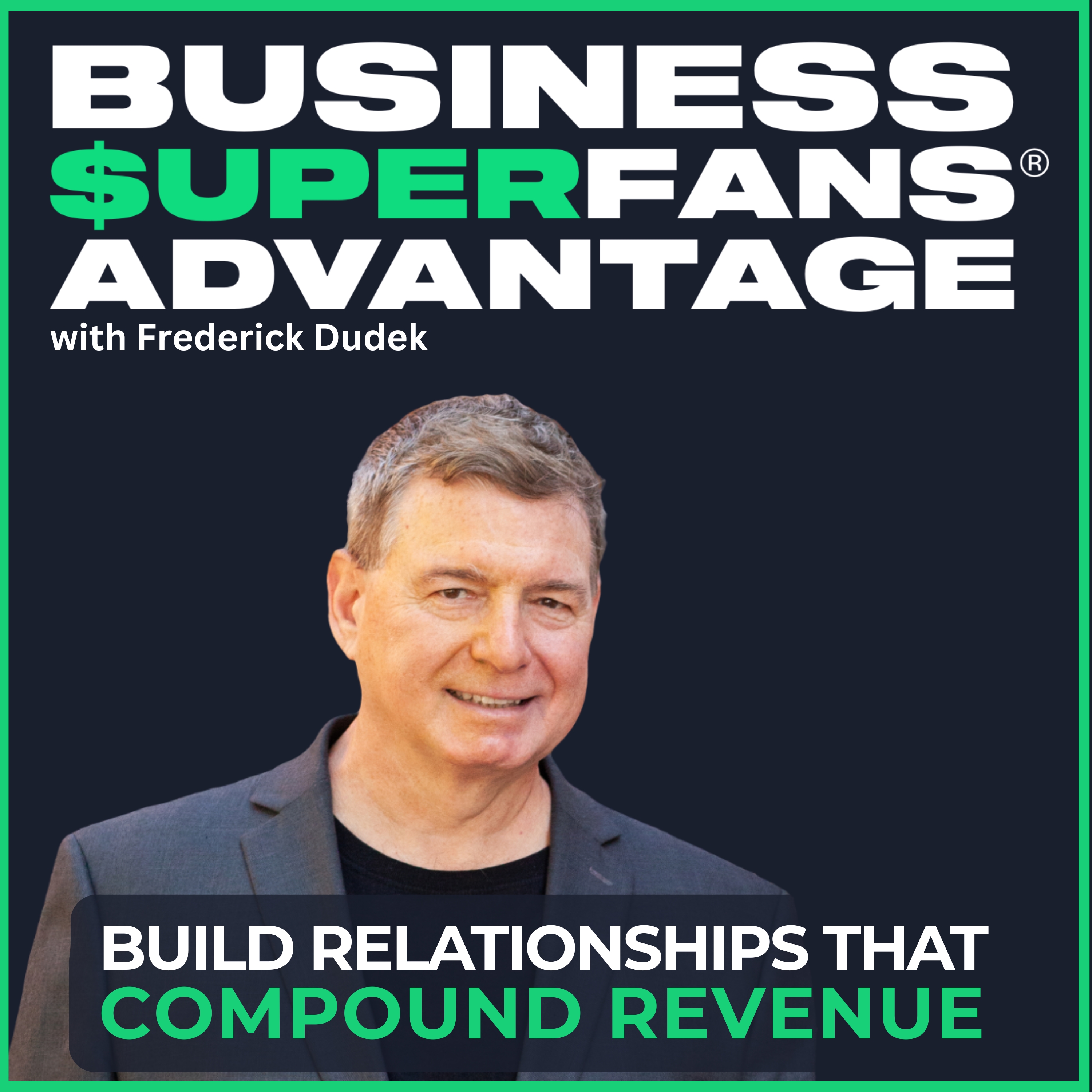
From MD to Entrepreneur with Dr. Pranay Parikh | Creating Superfans with, Frederick Dudek
Creating superfans in your business is the name of the game, and today we're diving deep into how to transform customers and employees into those raving supporters who cheer you on louder than a sports fan on game day. We chat with Frederick, an expert in building those relationships that really count, and he shares some killer insights on ways to make your team and customers feel appreciated—like sending a thoughtful birthday card or recognizing their hard work in front of the whole crew. It's all about creating a vibe where everyone feels valued and excited to promote your business without you even having to ask. Plus, we discuss the importance of genuine connections and how a little recognition can go a long way in turning casual customers into loyal superfans. So, grab your favorite drink, sit back, and let’s get into the nitty-gritty of building that fan base!
Honestly, all businesses need superfans. These are not only the people who will buy your products but also the right people you want to work with as a business owner. Superfans are a business’ loyal client base, which, in most cases, becomes your brand ambassadors. Imagine treating your clients so well that they tell their friends to come for the same experience. You will never spend on advertising any other time. It’s the squad that sends you referrals and sells the brand on your behalf. Learn how to get more of those superfans and keep them with our today’s guest, Frederick Dudek.
Frederick is the author of a best-selling book, podcaster, speaker, and sales & marketing executive with over 30+ years of experience achieving breakthrough sales performance results in domestic & global business markets. He has led corporate sales and marketing efforts in the SaaS industry. Frederick’s combined knowledge in Marketing, Sales Processes, Channel/Partner Relationships, SaaS Sales, Cloud Computing, Complex Consultive Selling/Negotiation, C-level Networking & Relationship Building has rapidly helped organizations accelerate their growth
curve. In this podcast episode, we talk about how to create superfans. You will enjoy how to make sales and how to have fun, something that you’ve always dreaded.
Key Highlights from the Show
[00:00] Episode intro and a quick bio of the guest, Frederick Dudek
[01:35] How Frederick’s idea of superfans came about
[02:39] Know more about Frederick and his passion for writing the superfans book
[04:36] Frederick’s foundation of sales
[06:25] The three types of salespeople
[08:03] Why numbers should be the last thing to talk about in sales
[12:45] How to get clients to know what they need
[15:57] Your good business experience will speak for itself
[19:24] What Frederick has learned in creating superfans
[26:41] Common mistakes people make when building superfans
[30:02] Frederick’s advice to medical doctors starting their sales side gig
[32:18] Pain points he has experienced in sales
[33:51] The one thing Frederick wishes to have put more resources into when starting his entrepreneurship journey
[36:12] How Frederick stays up to date and the sales training he recommends
Notable Quotes
● In sales, if you get down to numbers and specifications with your clients, you’ve probably lost the sale already. [08:03]
● A lot of times, clients don’t even know what they want. You must know how to help them decide as a salesperson. [12:42]
● Your business superfans are literally selling on your behalf. [15:08]
● Regardless of color and religion, human beings will crawl through broken glass for
appreciation and recognition for a good experience you gave them. [15:57]
● “Imagine” is a powerful sales word because it gets down to a customer’s mindset.
Salespeople should use it frequently because it changes the dynamics of the
conversation. [32:29]
Takeaways:
- Sending a birthday card can really make someone's day and strengthen relationships.
- Creating superfans is essential for any business to thrive and grow organically.
- The importance of genuine appreciation can turn employees into loyal advocates for your brand.
- Sales success hinges on understanding customer aspirations rather than just selling products.
- Recognizing team efforts publicly can significantly boost morale and encourage others.
- Building authentic relationships without always being in sales mode fosters long-term connections.
Transcript
One thing is sending an employee a birthday card, you know, old fashioned card through the mail with, with the gift card or something. It just makes, it just changes the dynamics.
You know, it might be the only card that they got but you know, you'll get the text message that says, oh my God, thank you so much for the card and the gift. It was so thoughtful. I mean I get those every day. Those things make a big difference.
And I do that with customers, I do that with business partners because that's, you know, it's a way of staying on top of mind without selling.
Pranay:Hi and welcome to the From MD to Entrepreneur podcast. An inside look on how to become a physician entrepreneur. Frederick is an award winning author, speaker and top sales executive.
In this podcast we talk all about how to create super fans. You'll enjoy how to do sales and how to make it fun and not something that you always dread. Hey Frederick, how's it going?
Freddy D:It's going good, Pranay. How about yourself?
Pranay:It's going well. It's going well. Very happy that we're able to connect you talk about super fans. This is really the one thing that all businesses need.
They need raving fans. So I'm super excited to be able to talk about how to get more of those.
And it's not only, you know, people that are going to buy your product, but it's the right people, right type of people, the people that you want to work with.
Freddy D:Oh, absolutely, absolutely.
It's, you know, the idea of superfans and why I called them that was if you think of a sports team and you think of the fans that have their faces painted and got the banners, the jerseys, the hats, those are super fans for that team. And you know, if you think about it, is the team paying them for that? No. Are they making money off of the merchandise? Most likely, yes, in a big way.
But these people are excited and they're promoting and they're happy to have the bumper stickers and stuff to advertise the thing.
So the idea came is why can't a small, medium or large size business turn their customers and their employees and their business partners into their own business? Superfans promoting their that particular business. And I wrote a book on it.
Pranay:Awesome, awesome.
Freddy D:That's how the book came about.
Pranay:So for people that haven't had a chance to check out the book, could you tell us a little bit about yourself?
Freddy D:Yes. So I've been in the. I start off, do the super executive version.
d for those that remember the:And after about a year working for the company, I learned about some opportunities to work for the actual software developers. And so I put together a resume, I got hired and I did training and then software demonstrations and all that stuff.
And then eventually I got into sales. The company was looking for people inside and to become salespeople. I raised my hand and got picked and I was very fortunate.
and I've been in sales since:I've won some awards and I worked myself up to being in charge of global sales where I was given, you know, here's, you know, here's, here's the product description and nobody knows about it and go put it on a map and make sure it sells globally. And so I became known as the guy that kind of comes into companies and takes a product or service and grows it. And that's my story.
Pranay:And sales is something that a lot of us struggle with. And so what do you, how did you start learning sales? You know, it's not something they teach you in school.
Where did you go to learn and kind of what, what is your foundation of being good at sales?
Freddy D:Well, as I had mentioned, I was fortunate. I got sent to schools. So I went through Wilson. Learning was a program. I went to Dale Carnegie and a couple other classes.
I don't remember the name off the top of my head, but some high end programs that I learned sales aspects. And what I really learned was solution selling early on.
But as I got better in sales, I evolved into looking where a company, you know, wanted to go in a few years.
So I stopped selling the product I was selling, you know, basically my, you know, when I really started to take off, I was selling manufacturing software and at the end of the day, they all do the job. This one does that functionality better, that one does this functionality better. But they all get the work done, otherwise they wouldn't exist.
But where I differentiated myself is I would sit down with the owner of the company, tool and die shop, for example, and talk about, okay, where do you want to see yourself in a couple years as the business and what are some of the challenges and how can, you know, how can you see technology help you so I wasn't selling anymore.
I was really kind of talking about where they wanted to go and how tools, AKA like software, manufacturing software, would help them achieve that goal. And so we never really got into, you know, can it do this functionality and that functionality versus this guy functionality.
Those were enough for part of the conversation. So, you know, there's, there's three types of salespeople. There's a product salesperson that just sells a product.
This is my widget, and this is what it is. There's a guy that's a solution selling, and then there's the, the top guys I look at is basically consultive selling.
We're talking about business strategies and you're just providing tools to accomplish those strategies.
Pranay:And do you think that you can have, you can sell the same thing with each of those different sales types, or does it depend on what you're trying to sell?
Freddy D:It's good question. It's your, your, your depends on what you're going to sell because there's transactional type products.
But at the end of the day, you know, whenever you've walked into, let's say a Best Buy and someone comes by to you and asks you about a TV that you'. @, You know, they usually try to talk to you about the, you know, you're looking at this tv, great tv, blah, blah, blah.
Instead of, you know, why are you looking at a tv? You know, is it something, you know, do you have one?
Is you're not happy about the existing one, what kind of movies you want to watch, you know, more about you, and it's versus because the TV is a tv.
I mean, you go, you can go lg, you can go, you know, Sony, you can go, you know, Samsung, there's a multitude of different TVs, so they all provide a video. But you know, if you learn a little bit about what that person's objectives are, you can steer them the way you want to.
Pranay:Yeah, I tell our salespeople that if you get down to numbers and specifications, you probably already lost a sale.
Freddy D:Absolutely correct. Absolutely correct. Yeah, I never get numbers. Numbers is the last thing I talk about. And usually it's when we're signing up the paperwork.
Pranay:Yeah, because you know, people aspect ratios and you know, how many pixels and all that stuff. Like, can you really tell between 100 and 1,000 pixels and 100,000 pixels? You can't, but it's.
People are putting up roadblocks along the way and you're trying to appeal to the rational mind, but the rational mind is not the One that makes decisions. You know, actually the emotional mind is the one that makes decisions.
Like, hey, if you have this tv, it's gonna say X about your lifestyle, you know, that, you know, maybe you really care about your family. It's big and you know, it has good gaming. So you care about your son or you know, some, something like that.
Freddy D:But you gotta ask questions. Like we said, you ask questions, you know, as a CEO of a company, they're interested in basically three questions. What's it cost me?
What's it going to do for me? And how much and how fast am I going to make my money back and what my profit's going to be? That's it.
They don't care if it's blue, green, purple, whatever, you know, it's a, it's, it's, what's it going to cost me, how much, how long is it going to take me, what's it going to do for me? And then how long is it going to take me to make my money back and have a profit?
Pranay:Yeah. As a leader of a company, it's like it kills me when people put me through this long sales process.
Like just tell me how much it costs and what I need to do. Like I just, I'm ready to buy, you know, don't put me through, okay, now think about what impact this is going to make on your life.
Like, I understand sales. Like, don't put me through this long sales process. Like I am ready to buy.
Freddy D:They gotta be agile. They gotta be agile.
Pranay:Yeah.
Freddy D:As a salesperson you have to be agile because you gotta know, okay, you know what next? Shut up. Move on to the next thing.
Pranay:Yeah, yeah. I, I had this fitness coach that I tried to hire. I was like, hey, I'm ready to go, I'm ready to pay.
And he made me fill out this 30 question questionnaire and he's like, it's just to see if you're, if you're, if you're willing to do it right, if you're motivated. I was like, if I'm giving you this much money, I'm gonna be motivated, you know. But you're right, you have add agility, right? It's different.
You can't have the same sales process for everyone. So there's people that are busy order decision makers, you know, and you don't, especially on kind of the lower rung of sales.
It's almost like a template, right? You're going down this path when it's almost like one of those, you remember those books where you had to pick a different way.
And you're like, go, go. If you decide to go left, go to page 42. You know, that's what they need. Not a template like a. A flowchart that people go down.
Freddy D:Well, yeah, absolutely. I mean, I remember years ago, selling in Chicago, I was selling to a railroad car manufacturer.
And, you know, we went through the engineering department of saw again, engineering, manufacturing, software. And we got. Okay, now we got to go present to the CEO. Well, walk into this office, huge office. He's got the glass. I mean, I'll never forget it.
Glass wall. It's got a helo pad right off outside the wall. So, you know, this guy is like big leagues. And he doesn't even get up from his desk.
He looks at us, looks his watch, and goes, you got five minutes and shut up. And so, you know, I started my presentation because I was up first, and I looked at my watch and says, my five minutes are up.
And I had wrapped up my conversation. He looked, smiled, stood up, and he goes, okay.
He continued the meeting because of the fact that I had enough wherewithal to recognize his five minutes and say my time was up. And I finished what he needed to say at the five minute mark. So one thing, that was the $150,000 sale.
Pranay:Awesome, awesome. So you mentioned getting to know what the person that you're trying to sail to, and that's important.
So how do you, you know, and it probably doesn't matter exactly what you're selling. How do you get to know what the person wants? Because, you know, a lot of times they don't even know what they themselves want.
Freddy D:Well, good question.
And that's a good segue into superfans, because what I'm going to share created my first superfan, this guy named Bob, and I won't mention his last name. He was in charge of a manufacturing company at Tool and Die. He was the IT guy.
And as I got to know him, I started asking him what his aspirations were. You know, just like I mentioned earlier, looking about a CEO where they want to grow their business. Okay, now he's an IT guy.
Where does he see himself, you know, in a couple years?
Well, it turned out that, you know, the company is looking to acquire additional companies, and he wanted to be the primary IT guy in charge of all the technology in all the companies and sub companies that this company was going in that direction. So I sat down and says, okay, let's put out a plan and let's help each other out.
You know, I need sales and you need the technology to accomplish what you want. And you know, and then when he was going through a divorce, who was sitting having beers with them, listening to all his challenges?
This guy, and he became my biggest business super fan because he would recommend other companies. He was my, he would provide testimonials, he would give me referrals of other businesses that could, you know, needed our technology.
He helped make my fastest sale, which was 30 minutes for a $60,000 sale. And the funny part is we were, you know, back then we had to, you know, carry big PCs and monitors and all that stuff.
And so we had a big cart and we were wheeling it into this company that I got referred by Bob and the guy says, I don't need to see any of this stuff. He goes, jack, the owner told me I need to get this, so what's it going to cost me and how fast can you get it?
So the 30 minutes was putting together the configuration of the stuff and then I use their fax machine to fax the order to corporate and it was done in roughly 30 minutes.
And it was because my super fan referred me and it was a done deal because you know, super fans are, are basically selling on your behalf and that's the important aspect of it.
Pranay:And so it's not something, you know, there's no trick, there's no thing to say. This, this is a relationship that's built up over time and that's so important.
You know, we're these days, we're always looking for the quick hack, a quick tip on how to shortcut a lot of this stuff. This, especially this first relationship. And probably most of them were years in the making.
Freddy D:Well, it's years are making but it can also be really short because see one of my quotes in the book. So I'll hold it up so people can see.
But one of my quotes in the book is that human beings, irregardless of what color, what religion, anything stuff, it doesn't matter, will crawl through broken glass for appreciation and recognition. Tell me I'm wrong.
Pranay:Yeah, you know, it's. Yeah, it's funny. Well, not funny, but surprising what people remember, especially when you're gratitude.
Remember one of my last days at a hospital I worked at, a nurse gave me a bottle of wine and said I was, I was so nice to her because I work nights and you know, most of the times when nurses call doctors at nighttime, they're not very happ happy about it. But she was like, oh, you walked me through it and you were so nice about it and I was, for.
Freddy D:Me, it was just another recognition and gratitude.
Pranay:Yeah. And she remembered it for years.
Freddy D:Yeah, it's. That's why I say people will crawl through broken glass for appreciation and recognition because they don't get it.
You know, somebody goes about, does a little something extra. You know, people take it for granted.
And you know, one of the things that I talk about in the book is the fact that there's people that talk about customer engagement, customer retention and all that stuff, and they're experts in it. But if you stop and think about it, that's really a silo because it's not all aspects of the business. It's one aspect. It's the same thing.
When people talk about employee motivation, engagement and retention, that's really another silo that they're talking about because it's not how businesses really operate. And nobody ever talks about complementary business alliance partners, as I call them.
You know, and a simple example is, excuse me, a painter and a flooring guy, they go together, but in reality, in business, they're all intertwined because if your employee isn't taking care of your customers, your customers aren't happy, it doesn't matter what you do.
And then if your employee is the painter who goes to do the flooring guys referral and does a poor job painting, now it looks bad on the flooring guy for recommending you and also bad on your company. So that's a double negative. So they're really all intertwined.
And what I talk about in business superfans is really how to convert those people into, you know, business super fans for your business that are happy to promote your business, that they tell all their friends and family members about the business because you've, you've recognized them on a birthday, you sense some kind of appreciation, you expressed gratitude for something that they've done. You know, the unexpected extra where they go above and beyond. Those are really important things that in turn motivate people.
And now they want to be sharing and talking about your business because they're excited, they feel worthy of it.
Pranay:Do you, have you mentioned it all being kind of a coherent or holistic strategy? Could you talk about some of the things that you've seen in your experience for making superfans out of your employees?
Because one of the biggest issues right now is keeping people and bringing on new people in terms of hiring.
Freddy D:All right, very good question. So a couple things. One is we don't, we people need to do a better job of recognizing their team because bottom line is no employees no business.
I don't care who you are, you know, yeah, you started the business yourself, blah, blah, blah. But you now, you got to a level that you have to have a team that does support the business.
And if the team walks away, you're out of business, end of story, just like that. So one is appreciation, showing gratitude to them, recognizing them in front of everybody. So, you know, if I turn around, says Pramar, thanks a lot.
Really appreciate your effort on this particular thing that you did for me. All right, you feel good, right? I recognize you now.
However, if I change it and says, hey, everybody, I want to take a minute to recognize Premier here. He was really helpful and really important in all this particular project. And it was, you know, he really worked his butt off.
And I want everybody to thank him for his contribution to make this project a success. How do you feel night and day Difference. You edified that person and make them feel wow, you know, in front of everybody else.
And what you've just done is not only make that person feel really good, you just made the whole team realize that, wow, they really care about us. I want to be that next guy. And it changes the mindset just like that, into where everybody's going, like, wow, you know, that was really cool.
This is a cool company, and it just catches. And once you get that vibe going, then it's your job to keep the flame going so that everybody's fired up and everything else.
You know, it's taking time out for someone's birthday and having, you know, lunch brought in and recognizing the person for the birthday, you know, posting something that they, you know, posting on social media that that employee was a contributor to a particular project or, you know, helped make something successful. You know, those kind of things. We've lost a little bit of that over time. You know, we. We kind of moved.
I see a lot of companies have moved into, well, you know, I gave them a job they should be grateful to, you know, and. And I'm sure you've run into companies like that, and. And that's not a good environment. The environment is where there's. There's.
And there's synergy and energy and everybody is working together, and we don't, you know, it's not. Oh, man, it's lunchtime. I gotta take my break or I gotta take my. It's break time. That. Talk to me after the break.
You know, the mindset changes is what. What. You know, wait a minute. All right, what do you need? I'll take the break later, you know, because it's got that energy.
Pranay:Yeah. And there's no cost to that. Right. It was just changing your mindset a little bit and encouraging people to, you know, do better and do good.
Freddy D:Yeah. But it's again, you've got to appreciate, got to recognize, gotta express gratitude, gotta say thank you.
And it can't be artificial because artificial is see through. People see through it, they'll feel it, they'll know it's.
Yeah, just bs but if it's genuine, it says, you know, really appreciate you spending, you know, working last night on this particular project.
I'll share a story real quick, and this is where I learned it from, is we were preparing for a large demo of a particular product and for a particular company and showing how software would design their products. So we were making sure. So we were. It was like about midnight. We're still at the office because the demo's next day.
Our manager came in with pizzas and beer and sat with us, had pizzas and had us all have a beer with them. And true story. I know the guy, Tom V is his name. And we were just floored.
You know, I was like, here he is, spent, you know, 45 minutes with us and told us, okay, you guys, don't stay up too late. But I know you guys will. But blah, blah, blah.
We did the demo the next day and when the demo was done, it was like a Thursday goes, all right, I'll see you guys Monday. What do you mean? You guys deserve it. Get out of here. Go. Bye. And I still talk about it today. And that had a profound positive impact.
And that's how I've treated my team members in the same fashion. And that's created super fans of my employees about my management style.
Pranay:Yeah, we just finished a deal recently. We do real estate and we buy big apartment complexes.
You know, I made a video thanking everyone, but not just, you know, by name, but what specifically they added to each product and the, the difference that it made for us. Right.
So one person handles all the customer service and how thankful we were that they were able to get all these emails answered so quickly and, you know, so on. And we also did. I called it dessert hour because, you know, not everyone drinks. So we didn't want to do happy hour.
So we ordered pies and cakes for everyone and we did our, our team's fully remote. So, you know, everyone just hung out for an hour virtually. And everyone loved it.
Freddy D:Oh, sure, yeah. You know, one thing is sending an employee a birthday card, you know, old fashioned card through the mail.
With the, with the gift card or something, it just makes. It just changes the dynamics.
You know, it might be the only card that they got, but, you know, you'll get the text message that says, oh, my God, thank you so much for the card and the gift. It was so thoughtful. I mean, I get those every day, you know, because I've, you know, so those things make a big difference.
And I do that with customers. I do that with business partners because that's, you know, it's a way of staying on top of mind without selling. You don't need to always be selling.
You always need to be closing, but you don't always need to be selling.
Pranay:The longer you can, the more communication you can have, Especially when you don't have anything to sell, especially when they. The customer has nothing to give you. That's, you know, that's creating an authentic relationship. And you're right.
Then people, when you do reach out and you do need something, people are not going to feel like, you know, Joe, Joe just always reaches out to me when he needs something.
You know, you all have people like that in your life, but when there's one of your friends that just keeps giving and giving and giving, when they do need something, you're happy to help them out.
Freddy D:Absolutely. Absolutely. Totally agree. I mean, it just. What goes around comes around and comes back 10 times. So it's always, you know, what you.
What you sow is what you reap.
Pranay:So, Frederick, say someone's read the book and. But maybe they skimmed it and they're trying this out on by themselves. What are some common mistakes that you've seen?
People that, you know, probably want to try to do this, but maybe they just did it wrong by implementing it.
Freddy D:Well, excellent question. In the book, each chapter, when you get to the end of a particular chapter, there is a section which basically calls. You can't see it.
But, you know, there's a section here that gets into how do you rate yourself on a scale 0 to 10 for that chapter? The difference also that I did is the book is really designed to be an action guide. So that's why I call it, you know, the.
It's a playbook because it gives you the steps and the recommended tools per each chapter on what to use and how to do it. Then when you score yourself, you go to the. What we call the superfans scorecard wheel. All right, It's a dartboard.
And you take the numbers and, you know, it's all the chapters.
So, you know, gratitude, prospecting, follow up, thank you, birthdays, appreciation, recognition, retention, the unexpected reviews and referrals, and you start dotting where you're at. And then you connect the dots and most likely most people have a dilapidated wheel. You know, it's not exactly perfectly round. Well, then in here.
And this is a free thing that you can get off of the businesssuperfans.com website. It's also in the book, but this is the bigger version. And you can read it because the book makes it kind of small, but then it tells you steps to do.
And there is a guide of what you need to do. So, you know, action steps, who's responsible, deadline, resources, barrier, and the results of that all into here.
So it helps you improve your score. So the whole thing is designed to really not just be something that you read and God, a great book. Put it on a shelf and you never pick it up.
It's going to be, oh, great book. What do I need to do for, you know, appreciation? And whether it's a customer, an employee or a business partner, it's all in that one chapter.
So it's also designed. Where was that section? No, I want to improve my thank you. I go to the thank you chapter.
I mean, it's not what they're called, but you know, that's, you know, the thank you chapters. Thank you builds a bond of trust, you know, appreciation. Create an environment of appreciation. Give them what they crave, recognition.
And so each chapter contains everything you need to do. And then also I've. I'm launching the business superfans accelerator community where people will be able to reach out to me and I help.
I'll be basically keeping them accountable to help them accomplish just what you said is how, you know, how do people do and they're not sure. Well, they'll be able to reach out to me directly and I'll guide them.
Pranay:Frederick, you've been doing sales for a while, and for a lot of doctors, especially doctor entrepreneurs, sales is scary. What is your advice to someone that's starting to do sales? Maybe they have a product or service, they know it's good.
Their goal is to help as many people as possible. What would your advice be to a young person just starting their sales career?
Freddy D:In the medical field?
Pranay:Yeah, in the medical. Say they're coach. So they're, they're, they're medical doctors, but they have something outside of medicine. So maybe they're a coach.
Maybe they have a book and they gotta start selling it to publishing agents. You know, just having to go out and sell themselves or their Product, it's.
Freddy D:Really focus on the value that you're going to bring. That's really the bottom line. You know, you're, you're, you know, for example, the language and interpreting.
Today, the company I work with, you know, we're creating a bridge of communications with people that, you know, may not be English proficient. So we help them communicate with agencies and get services and all that stuff. So it's really in that sale.
The way I approach it is, you know, imagine the audience that you could gain if you could have a means to communicate with the limited speaking English people, you know, and all of a sudden they go, well, yeah, that could be another. That could grow a whole nother area of my business.
Well, here's a vehicle that, using a smartphone, you can get to a live interpreter and get connected to one in less than 30 seconds through the service that we offer. How would that, how could you see yourself utilizing that? And now you get the person to start selling themselves on why and how that would benefit.
That's really the, the art of it is if you're, you know, I always tell, you know, if you're dating and you're. And you got the pretty girl and you're chasing her, what is she doing?
She's running away from you, okay, if you stand there and, and provide, you make yourself attractive, she's coming towards you.
So the same thing in sales, you know, provide the value and how this is going to impact them in a positive way and then get them to start selling themselves on.
Pranay:Is there a part of the process where you bring in the pain points?
Because, you know, a lot of people, when they talk about sales, they try to think about, you know, what are the negatives, what is happening right now or what can happen bad in the future if you don't buy the product.
Freddy D:Well, you can bring up pain points, but you want them to bring up the pain points. You don't want to bring up the pain points. You want them to recognize and bring up the pain points.
So, you know, turn around and say, okay, imagine, you know, and imagine is a very powerful sales word because it gets them into that mindset.
Not a people, not say a lot of salespeople use that word, but it really should be used a lot more because it changes the dynamics of conversation because you're no longer selling. You're getting them to, you know, like you said earlier, people buy emotionally, so you get them to think about it emotionally.
So, you know, imagine, you know, my, my companionette girlfriend, slash, you know, companion, etc. She sells hearing aids and you know, over the phone, telephone and, and she uses the word imagine her and I've talked and we.
She uses that strategy and it really is, you know, just imagine you being in a crowd and how would it be like to be able to hear what other people are saying without having to read lips and all that stuff. And they go, well, yeah, that would be terrific. Well, what else would. Would that help benefit you?
And the negative points really don't necessarily need to come up because they're coming up with all the reasons why it would help them.
Pranay:Yeah. Love it.
So one last question I ask everyone, if there was something that you wish you would have spent more time or money in when you first started sales or entrepreneurship, what would that be?
Freddy D:Good question. It'd be if I'd spend more time, it would probably be learning more and taking additional sales classes and staying current.
Staying current I think is important because things change, you know, much faster and don't be afraid of change and don't get stuck into.
If you're using one tool to manage your sales process and there's a better tool that comes along, jetsend the old one, pick the better one because it's going to pay you dividends much faster. And that took me a little while to grasp.
And your thing that I'd say was, I'll share one last quick story which will make the point is when I first started in sales, all I had to do was get this company to re sign the lease on this technology that they were using. That was it. That was my job. I went there, they started asking me questions about different competitors and all that stuff.
And all I did was talk about all the negative stuff of all the competitors and I lost the sale.
And they were an existing customer for several years and my district manager was not happy with me and made me go get the equipment myself and bring it back as punishment. But I had the wherewithal to ask the company and basically they said, why did they pick a competitor?
He says, well, you never said anything good about your company. The competitor talked about, yeah, you're a great company, but here's how we can solve some of your problems.
And all you were doing is all the negative stuff and all the pain points. And so, you know, I learned that fortunately in my career I learned it early on. So if I could share anything is. Don't do that.
Pranay:Is there two questions? Is there any sales, of course, your book, but any other sales trainings that you would recommend? And number two, how do you stay.
Freddy D:Current now Okay, I highly recommend Dale Carnegie. It's a, it's a great program. I took the, you know, the public speaking and.
And relations program, which really, as an engineer, you know, which is what I was years ago. I never spoke in front of anybody. I never spoke to anything, you know, so I, that really changed me.
And so I highly recommend that program and also the management one. If somebody's in management, they got a great management program, which is different than what you learn in a lot of other places. Really.
It's managed by objectives. And you get that person or employee to create their own goals and objectives for their job.
And you just hold them to it because they're the ones that said, this is. I plan on doing this. I want to accomplish this. Okay, we'll write this down. We'll tweak a couple of things to fit what the company needs.
But now, you know, I'm going to keep you accountable to what you said you want to do. That's my job. It makes it easy and they own it. And how do I keep current? I'm always reading stuff.
So you've always got to be researching and, and finding different tools and such. And like I said earlier, if you take a look at, if you're using a CRM, you should take a look and see what.
Every so often take a look at what else is out there.
Because all of a sudden you might find out that there's a newbie that may not be well known, but they got really cool ideas and that might be a way to go because it's ahead of its curve. So I incorporated AI software a long time ago because that was where technology was going and I was ahead of the curve.
Pranay:Awesome. Well, Frederick, thank you so much for your time. I really appreciate it.
Freddy D:I appreciate it. And again, thank you for the opportunity to chat and it was a pleasure.
And if anybody's looking for more information on the book, they can go to business superfans.com that's business superfans.com awesome.
Pranay:Thank you.
Freddy D:Bye bye.
Pranay:Thank you for listening. If you have any questions or would like to follow me, please sign up for my newsletter@frommd.com.