Episode 4
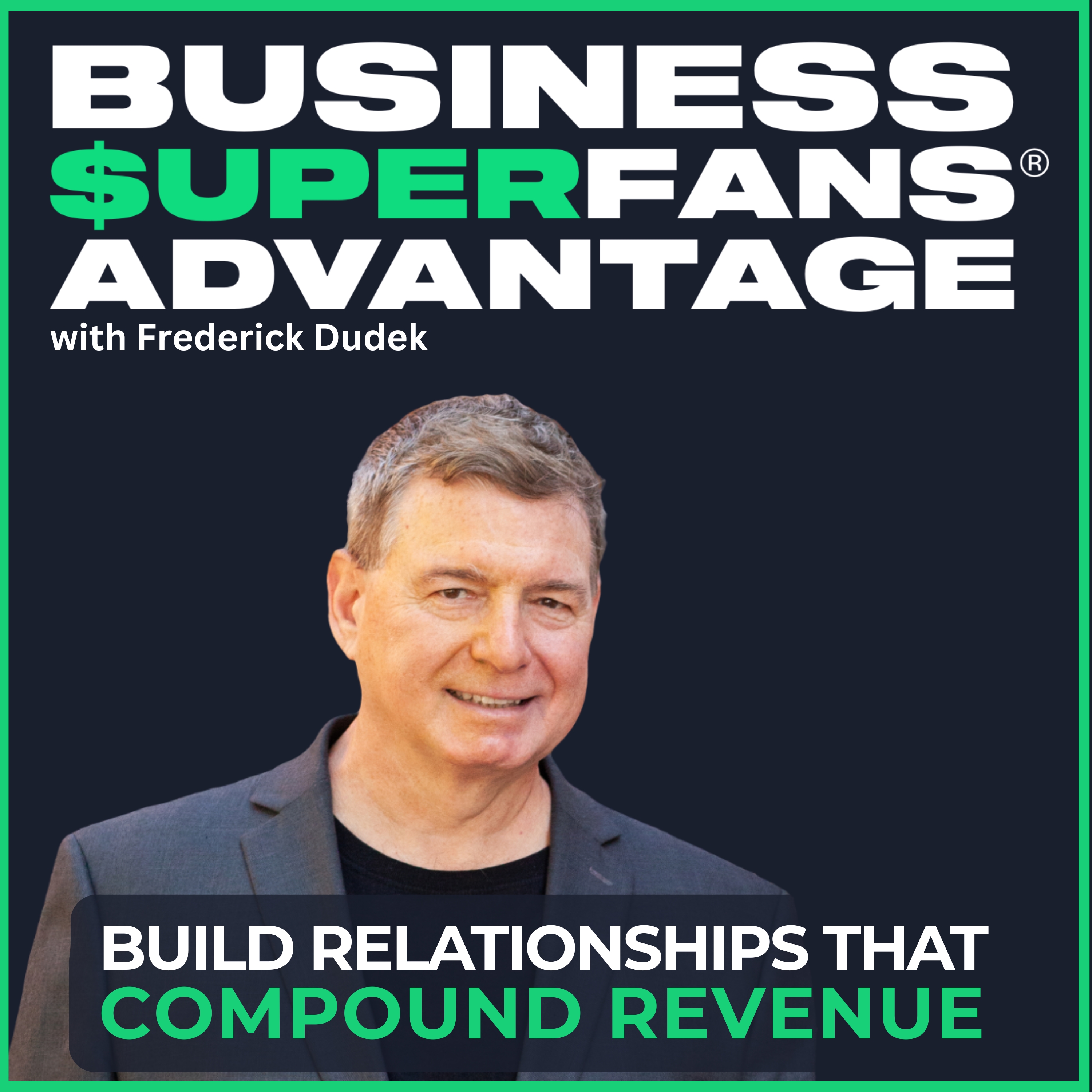
Mr Biz Radio | How to Create Business SuperFans with Author, Frederick Dudek
Creating business superfans is at the heart of our chat this week, and trust me, you don't want to miss this! We’ve got Frederick Dudek on the show, an absolute whiz who’s turned the art of business relationships into a science with his book, "Business Superfans." He dives into how to turn casual customers into raving fans who’ll promote your business like it’s their own – and who wouldn’t want that? We explore the power of personal touches, the importance of recognition, and how to keep the conversation going long after the sale. Plus, Frederick shares some actionable tips you can implement right away to start building your own squad of superfans. So, sit back, relax, and let's get into the nitty-gritty of transforming your business game!
Check out the latest episode below. Mr.Biz Radio provides business owners with the knowledge and insights needed to drive their companies forward.
This is an interview with the author of Creating Business Superfans, Mr. Frederick Dudek.
Takeaways:
- Creating superfans for your business is about building genuine relationships, not just transactions.
- To turn customers into superfans, personal recognition and appreciation can go a long way.
- Unexpected extras in customer service can create loyalty that leads to enthusiastic referrals.
- Successful sales strategies focus on understanding customer needs for long-term relationships, not just immediate sales.
Transcript
Foreign.
Ken Wentworth:Biz talk for biz owners. If you're ready to stop faking the funk and take your business onward and upward, this show is for you. And now, here's Mr. Biz Ken Wentworth.
Ken Wentworth:All right, welcome to another episode of Mr. Biz Radio with me, Mr. Biz Ken Wentworth. And this week we're gonna.
We're gonna take a kind of a different, I guess, angle on something, you know, we've talked about on the fringes of things like this, but we have an absolute expert in this space, and that is creating business superfans. You know, we hear the term influencer all the time, things like that, you know, gurus and whatnot.
But our guest this week has actually written a book about how to create business superfans. And we. Who wouldn't want that, right? It just allows you to do so much more with the audience you have, building the audience you have, et cetera.
So this week, our guest is none other than Mr. Frederick Dudek. Frederick, welcome to Mr. Biz Radio.
Freddy D:Hey, Ken, thank you for having me on your show. Really excited about this.
Ken Wentworth:Yeah.
So when Frederick is not turning ideas into millions of dollars in global sales, the award winning author, speaker, and top sales executive spends his time inspiring others to achieve their biggest and highest business goals. Now you can receive the benefit of Frederick's mentorship and experience through his book, Business Superfans. So let's get started.
Tell us a little bit about some of your background, Frederick, your entrepreneurial journey, if you will.
Freddy D: an idea, if you remember the: Actually, no:Sorry, distracted here. When in the. In the industry, I learned basically. So I got distracted.
Ken Wentworth:That's all right.
Freddy D:So what we looked at is basically I learned computer aided engineering and ended up teaching people how to do think from basically 3D. They used to draw in 2D and then go to 3D. So I helped them learn how to change that.
And back in:Fast forward. Years later, I became a district manager. Then A regional manager.
And then in:And I was given the task of taking a product that nobody knew about and created a, did the marketing, set up about 60 resellers around the world and grew that from zero to about 3 million net to the company. So you're looking about 6 million. Street money as a profit margin was about 50%.
And one of the things that propelled my success was that all my customers, I really built relationships with them and really wasn't trying to sell them product, was working with the executive management or the owners of the companies and looked at where their strategies were. And so basically the approach was that my software was just happened to be a vehicle that would help them accomplish their goals.
And by having that kind of an approach, they started recommending me to other businesses. And so like my record in sales was, you know, we back then used to, you know, carry around all the big computer systems.
And we went to this manufacturing company and we were about to bring in, we were bringing in all the computer stuff and the owner goes, no, no, no, Jack told me that I need to speak to you. He goes, I need to know what's it going to cost me and how fast can you get it here because we're doing extra work for them.
So in 30 minutes most of the time was putting it out of the proposal, faxing it to corporate so that we could get his system to him as fast as possible. And it was all because I had a super fan that in turn recommended me and told this guy that they should buy from me.
So it wasn't a cost of pricing anymore.
And as I managed my distributor network around the world, these guys are independent businesses and so they can handle and market a multitude of products. They were all engineering and manufacturing products. But to get the mind share, you had to maintain those relationships.
And that's when I learned a lot about, you know, motivating those independent distributors and they'll and their sales force to in turn market our fair share of products.
And that's how we grew because we implemented recognition of not only the agency that was the reseller, but also the people that were actually doing the work work because at the end of the day, you know, they're out there doing the sales and the owner is the one that, you know, owns the company. So we recognize both of them and gave them awards and multitude of different things like that. So that really kind of grew.
And that's how I was able to take it from zero to about 3 million, like I say, net. And then, you know, I moved on into some other industries.
And recently I've been working with a interpreting and translation company, and I've been kind of consulting and working with them. And in the last. I've been dealing with them for the last 14 months.
And we've grown that business by one third and they've been stagnant for over five years.
And it's all basically by again, building up the team internally, recognizing employees, recognizing customers, putting out a newsletter and multitude of different things. And that's what has propelled me to where I'm at today.
Ken Wentworth:Nice. Nice. Well, you know, we only got a couple minutes left here in a segment, but I want to go back.
It's got to be quite a career shift for you, going from being a draftsman into sales. What. What caused you to kind of make that, that change that shift?
Freddy D:One of it was I watched a lot of sales people not know what they're doing trying to sell technology. And what I realized was, you know, they weren't presenting a solution. They were just trying to sell a product. And, you know, I was fortunate.
Years ago, I met a guy that turned me on to motivational books and inspirational books. I worked at a gas station back then. And that. That he actually, he's noted in the book because he completely changed my life.
And that was one of the things that I realized was that, you know, you. You need to be looking the long game, not the short game.
And so that's one of the reasons I would go with speak with owners and executive management of companies of where did they want to be five years from now? And then how do we get there? And the other approach was, you know, a lot of people talk about solution selling.
All that stuff I looked at, okay, when do you want to be profitable with this technology? And then I kind of invented the reverse sale, which is okay.
So, you know, we're not talking when you're buying it, we're talking when you're making with it. And then we got to work that all the way back to. Includes training and running two systems tandem until you're ready to switch over.
Multitude of different things. And that completely changed the game and collapsed the sales cycle.
Ken Wentworth:Yeah, it makes a lot of sense. And, you know, we've talked about it on the show so many different times. Is that even the folks who say, I don't like sales, I'm not a salesperson.
We are. Every person on the face of this earth is a salesperson.
Whether you want to believe it or not, and maybe not in a business sense, but for example, and I use this example all the time because I think it's funny, if you have kids, you're a salesperson because you're trying to talk your kid into eating green beans at the dinner table. That is, you're selling, you are selling your kids on why they should eat their green beans.
Freddy D:So we're all vice versa. The kids saying, mom, I'll be good. Oh, talk to your dad. So I'll sell dad on buying me the thing because I'll clean my room.
Ken Wentworth:Exactly. Exactly. So we're gonna hit a break here. We'll come back. Talking with Mr. Frederick Dudek. If you would like to reach hundreds.
Freddy D:Of thousands of business owners every week, Mr. Biz Radio can help. Our show airs globally seven days a week for more than 25 hours across several Internet radio stations, plus 20 plus podcast platforms.
Also, video exposure on the new, exclusive Mr. Biz Network streaming channel, which gets blasted to 100 streaming platforms and the Mr. Biz YouTube channel and our 350,000 social media followers multiple times every week. Join Mr. Biz Nation as an advertiser.
Speaker E:By emailing us@infoisterbizsolutions.com Are you ready to automate your business? Automation is the key to scaling a business and building wealth.
It's also one of the most difficult things for a small business owner to do on their own. If you're looking for help with Automation, Pulse Technology CRM can help. We have an exclusive offer for Mr. Biz Nation.
We will build everything for free, even if it's a sophisticated funnel. Visit thepulsespot.com mrbiz for this exclusive offer.
Ken Wentworth:Got a question for Mr. Biz you want answered on air? Email it to info@mrbizsolutions.com now, once again, here's Mr. Biz.
Ken Wentworth:All right, welcome back to the show. And it is time for Mr. Biz Tip of the week.
And this week is actually, it's a quote from none other than Mr. Grant Cardone, who anyone who's been watching the show for any length of time knows that I mentioned him often and have some connections with him. And he's been on the show actually a few times as well. But he has.
When I first heard him say this, I think at a conference a few years back, I'm like, I'm not sure I believe that. But the quote is best known, beats best product every time.
And if you think about that, the example that I like to give is McDonald's okay, I'm not trying to pick on McDonald's, but is McDonald's so popular because they have the best hamburgers? You could argue maybe they had the best fries because their fries are amazing. However, no, they're best known. Everywhere you go, there's McDonald's.
McDonald's is known worldwide, globally, all over the darn place. It's not because they have the best product at all. And frankly, it's becoming. They're not even the most convenient anymore.
I think that was one of the advantages they had way back, is they were very convenient, but they've even kind of lost some of that, especially with some of the changes. A lot of other restaurants and food places in the industry have made changes since the pandemic. But so that is the tip. And keep that in mind.
You know, best known beats the best product. That doesn't mean to have a crappy product doesn't mean that at all. But the genesis of the whole thing is you have to get known. And I.
You know, if someone in Idaho. I'm in Ohio, and if someone in Idaho, I could help. They don't know who I am. I can't help them.
So I have to be able to, you know, get known and have people know who I am and how I can help them. So that is the Mr. Biz tip of the week this week. So, Frederick, tell us a little bit about. Let's talk about your book business Superfans. I know.
Next segment, we're gonna. You're gonna give us some tips on how to create some superfans. But. So I don't want you to give away that secret sauce until we get to that point.
But tell us a little bit about the book, what caused you to want to write the book, and how that all come to fruition.
Freddy D:Okay, well, the book was an idea that I've had for a while, and this took actually about four years in the making. I started a couple different ideas, and they really didn't get off the ground, didn't get any legs, ran up by some people. And basically, this is.
It's nothing spectacular. And so, you know, crumbled it up, tossed it out, and started again in a different traction, a different direction.
And then all of a sudden, I got an idea that basically, about two years ago, you know, I got connected to some people that could help coach me through writing the book and, you know, editing and all that stuff. And I started to look at, you know, what would be a good topic, and I've always thought of, you know, blending.
Why can't a business owner get the energy from a sports team? Super fan, which is where the people got their faces painted and they got the banners and they got the bumper stickers and are promoting the.
The team. Is the team paying them for that?
Ken Wentworth:Not at all. The opposite.
Freddy D:They're.
Ken Wentworth:They're paying to buy the merchandise, right?
Freddy D:But they're promoting the team. So the idea was, why can't businesses create their own super fans to promote their business?
So I started looking at some research, you know, and doing some research on some of that stuff. And one things I realized is that people were writing stuff, but they were silos in my mind.
You know, there's people that, you know are experts in customer retention, customer motivation, customer engagement, and that's. That's it. Then there's other people that talk about employee motivation, employee retention, and all that stuff, but that's it.
Nobody ever talks about business alliance partners, complementary businesses. You don't see any books on that stuff.
And when I thought about it for a moment, and that's when the idea popped in, is that really they're intertwined. If you listen to Sir Richard Branson, he talks about, you take care of your employees, he'll take care of your customers.
And that's where I started to put this together. And so I started, you know, doing some research and throwing down some words. And this is primarily through the pandemic. And I gave it to some.
Some people that I respected, you know, their opinions. And they came back and says, hey, this is pretty good. You've got something here.
told her, okay, I threw down:And I'd have her read it. And she goes, this is not too bad.
And then, you know, as I started putting it more together, it started to come together, and then I came up with the different chapter titles. And what I created was I didn't want it to be a book that you just read. You know, you read it. Here's the book. You read it. Okay, nice.
It's on the shelf, and it's never looked at again. So I designed this book as more of a playbook that you can go back to each chapter, and everything that you need to do in the.
Relative to that chapter is in that chapter.
And that's really the difference between this book and other books is it combines ways and means of what I would call old school and new school methodologies to basically elevate or convert your customers, employees and business alliance partners into business super fans.
Ken Wentworth:Well, ironically enough, if you think about it, this week's tip, the quote from Grant Cardone really ties into, you know, the concept of creating super fans and frankly for yourself as well in writing this book. I'm sure because of the book you've gotten to be more well known, right? I mean it opens doors for you.
Freddy D:Absolutely.
It has changed my life in a fun and exciting way because it gives me also the ability to share decades of global sales and marketing experience with solopreneurs. Small to medium sized business owners that are good at what they do, but they get caught up in working in their business versus on their business.
I look into help them get themselves out of their own way and get the team which is collectively all the three groups. Because if you think of it this way, you've got let's say a painting company and a flooring company. Let's just keep it real simple.
But they complement one another as people get new floors and the paint needs no wall. I mean the wall needs new paint. The other way around, you get the new paint on the walls. Well, the flooring needs to be replaced.
And so those are complementary businesses. However, if or your team that goes out there and doesn't do a good job, that's a reflection on both companies now.
And so that becomes an issue because now both people have lost a potential referral source. And more worse is that they could possibly get a negative review which you can't remove. And so that has a real profound impact.
So those are things I talk about as well.
As an example would be that the painting guy is always giving the flooring guy referrals, but the flooring guy is not giving the painting guy any referrals.
So now that becomes a challenge because it's a one sided scenario and eventually the painting guys can say, you know what, this relationship isn't working and that relationship falls apart.
Ken Wentworth:Yeah, for sure. And I can see that. And you know, it's one of those things. I think you hit it on the head.
Frederick is a lot of folks overlook those, you know, those complimentary type businesses that aren't in competition with you but are like you said, complementary and can help each other. Again, we're talking this week guys with Mr. Frederick Dudek.
He is the author of Business Superfans and you can find out more actually@businesssuperfans.com that's businesssuperfans.com you can go out to his website, check out everything he's got going on there.
We're gonna hit a break here, but when we come back, Frederick is going to give us some tips on how we can create business super fans because that's again what we all want and again ties into this week's tip of becoming best known and helping grow your business in that manner. So when we come back, he is going to help us get us some business super fans. How would you like to have direct access to Mr. Biz to help you.
Freddy D:Run your business more profitably and more efficiently?
At mrbizsolutions.com you get live access to not only Mr. Biz, but also several of his hand picked and trusted business Experts, each with 20 plus years of experience to help you optimally manage and grow your business. That's just the start of where Mr. Biz Solutions begins. Learn more at MrBizSolutions.com that's MrBizSolutions.com Business.
Speaker F:Owners have a continually growing, growing to do list with little time for revenue producing activities. With check off your list and their experienced team of virtual assistants, you can focus on growing your business.
Visit checkoffyourlist.com to learn how check off your list. Skilled team can handle your day to day tasks like social media, bookkeeping, calendar maintenance and much more.
-: Ken Wentworth:Check out all three of Mr. Biz's best selling books@mrbizbooks.com now once again, here's Mr. Biz.
Ken Wentworth:All right, welcome back to the show and it's the moment we've all been waiting for, right?
aving an integral part of the:So Frederick, you know, give us if you would give us some tips, what are some things that, you know, business owners, entrepreneurs can do to create super fans?
Freddy D:Okay, well, let's talk about the book. This is what the book looks like. Okay. And I'm gonna go through some of the chapters real quick just to give people an idea of what's in there.
So it all begins with prospecting. That's the first chapter. Especially if You're a new business. How do you get business and why? Follow up is super important. We get into that.
Thank you for Builds a bond of trust. Get personal with birthday greetings. Create an environment of appreciation. Give them what they crave. Recognition retention saves you money.
Go beyond expectations with unexpected extras. Reviews are the new word of mouth and grow exponentially through referrals. Attraction rooted in gratitude. Game time.
So one of the things I talk about is in the book is that not only is there stories, but there's actual action steps and recommended tools to utilize for those to help you fulfill some of those items. So, you know, for example, in here in appreciation is give a thoughtful personalized gift to somebody.
So, you know, if you give somebody a swag product, you know, it's nice, but it's all about you because it's basically you're promoting yourself. If you modify that and make it, you know, to say, okay, you know, put Ken's name on it and say, hey, Ken, here's a great depreciation gift.
And it's got. It still may have my logo on it, but it's got your name on it. Now it's your coffee cup versus just a generic coffee cup.
And so those are, that's just one example, something very cost effective that you can do. The other thing that I kind of goof around with is, you know, birthdays.
People overlook the importance of birthdays, but birthdays is really a clever marketing strategy because it, you know, when I was dealing with, you know, my customers as well as my, you know, resellers or my channel, you know, when it was, you know, someone's birthday and I happen to be in that country, we, I take them out to dinner or something just to, you know, build relationships and, and build that camaraderie.
So one tip could be that, okay, if you're a brick and mortar business guy, you could turn around and say something kind of humorous and just say, hey, don't tell my accountant, but I'm going to give stuff away today. It's my birthday and it's my business. I'm giving it away. I mean, it's completely the opposite of what people think.
But the actual cool part is they're going to come to get the thing that you're giving away and most likely, what are you going to do? Buy more stuff. And so it works.
One of the customers that I've coached in this in business, Superfan Strategies, they opened up a pot pie store in the pandemic. And what they did was one of the girls, it Was a cashier, was it Anybody that did a.
Spent over $100 on pot pies and stuff, she would do a chicken dance and they videotaped it and they put that on Facebook.
And, you know, every time they went to farmers market, you know, she would get to hold up her phone, doesn't have to be Hollywood, and record a simple video. And, you know, they've organically gone from, you know, maybe 50 followers on Facebook to over 3,000 followers now.
Of the strategies that they've inputted and they've created out of, you know, they. They were one of my early readers in this book, and they implemented a referral program and a loyalty program that I talk about, and that's.
It has exploded their business. So those are just some of the different things.
The other thing is that, you know, if you turn around and say, I. I like, I can say, okay, Ken, you know, thanks a lot for your time today. Really appreciate you recording me on this particular show. Means a lot to me. Okay, that's nice. It's one to one now.
If I turn around, says, hey, everybody, I want to thank Ken for his efforts and getting me on the show and all the things he does and to help other people and grow their businesses. Do you see the dynamics?
Ken Wentworth:Sure.
Freddy D:I mean, it's much more. It's much more. You know, I'm edifying you. And so those are things that I talk about that it's really important to.
To be doing it, you know, that we take for granted. Most business owners have the mindset, well, just wait a minute. You know, I'm the one that gave you a job. Well, yeah, but no employee, no business.
So, you know, what are you going to do to. To keep them motivated? And it's the little simple things.
It's the, you know, one of the big things I talk about is the unexpected extra doing something at nobody is thought of. Quick short story, which I've actually wrote this story in the book. And then we went. We ordered stuff from a restaurant. We went to go pick it up.
You know, I went, nothing, no order. So the manager comes up real quick and says, okay, I'll buy you a beer. We'll get the food cooked right away.
Comes back out, the food, one of the dishes is completely wrong. So he apologizes profusely and goes back and says, I'll personally make sure it's done.
So he goes back, gets it cooked, comes out and says, hang on a second. Goes back in, comes back and says, I'm giving you guys a dessert. He hands us two coupons for $5 apiece. I says, all right, wow, thank you.
So he says, well, how much do I owe you? He goes, nothing. We screwed this up. We want to make it right. The guys got me as a super fan.
It's a phenomenal restaurant, great food, and we go there all the time because they went above beyond and did the unexpected extra for, for a, you know, mess up. And you know, the other thing that, that, that's an important tip is especially in, I'd say, and I don't want to pick on any industry, so.
But there's, you know, several industries where they come in, they do the work, they do a good job, and then you never hear from them again. You know, and we've all had work, for example, done on our homes and someone come in and done something and they disappear. They're completely gone.
They don't even send you a thank you card. They never back six months from now. And it's just opportunities are squandered.
So I talk about ways to not let that happen, how to stay in contact with that customer, because, okay, maybe they don't need your service for a year, two years, but they know people. Everybody knows at least 250 people.
So by staying in contact, you may not be getting business out of them, but they could be with one of their friends or a co worker or co business thing and the conversation comes up and next thing you know they're looking at, you know, they get referred. So those are some of the things.
The other thing that I did that's unique in business Superfans is that I've created the Superfan Scorecard and that's to become a superfan superstar. So each chapter basically has the ability to score yourself on that chapter from 0 to 10.
And then you come to the scorecard, which is like a dartboard, and you put your dots in where they fall and then you connect them. And most likely most business guys will have a dilapidated wheel because they're not doing all the things they should be.
So then there's an action plan into here of what you need to do. And there's even the ability to write that aspect down.
You know, what resources are going to take, what timeline you're going to do and all that stuff. And so that's available for free off of the businesssuperfans.com website. There's also in the book, but you can get the printed version as well.
As for somebody starting up, I did a lot of research. I'm putting together a customer avatar because if you don't know what your market is, how can you do any effective marketing?
So I spent weeks downloading everybody's avatar, restudying it all, and we created what I think is the best one and it's also available off the website and it goes through all the aspects of what you need to do to define an avatar and how to create your elevator pitch to attract those avatars based upon your type of business.
Ken Wentworth:Got it. Awesome stuff as always. Time seems to fly when we're having fun, but great tips and I love the concept of it.
Again, we've been talking with Frederick Dudek. He's the author of Business Super Fans. Frederick, thanks so much for coming on Mr. Biz Radio. Really appreciate it.
Freddy D:Well, thank you for the opportunity to be on the Mr. Biz radio show.
Ken Wentworth:Yeah, absolutely guys. So again, go out to business superfans. That's businesssuperfans.com thanks for watching. Thanks for listening. Have a great week.
And as always, don't forget, cash flow is king.
Ken Wentworth:To become part of Mr. Biz Nation, follow him on all social media platforms or never miss a show by going to mrbizradio.com if you prefer free video content, visit the Mr. Biz YouTube channel or check out his streaming channel which is available on 100 plus streaming platforms at Mr. Biz Network.com.